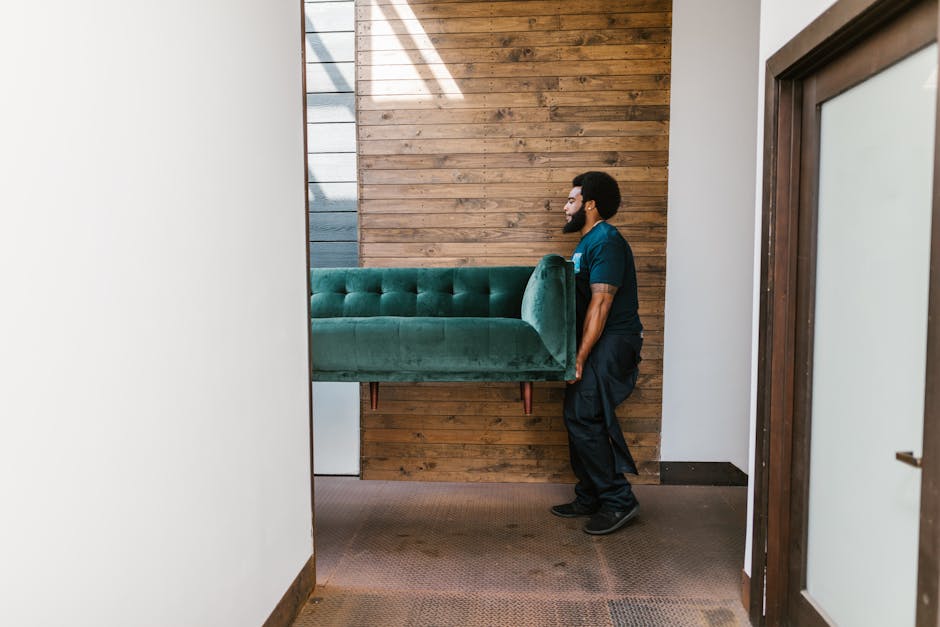
Hainault Forest Moves: Transporting Bulky Items Safely
Posted on 22/05/2026
Moving a heavy sofa up a narrow stairwell. Shifting a wardrobe through a tight hallway. Getting a fridge, piano, or bed base out without scuffing the walls or straining your back. That is the reality behind Hainault Forest Moves: Transporting Bulky Items Safely - and, truth be told, it is where good planning makes all the difference. Bulky-item moves are not just about strength. They are about balance, route planning, equipment, and knowing when a job is better handled by trained movers rather than a heroic weekend effort.
This guide breaks down what safe bulky-item transport involves, who it suits, which mistakes cause the most trouble, and how to reduce risk from the first lift to the final placement. If you are preparing a home move, arranging furniture removals, or simply need one awkward item moved across Hainault Forest and nearby parts of East London, you will find practical steps here that actually help.
Why Hainault Forest Moves: Transporting Bulky Items Safely Matters
Bulky items behave differently from ordinary boxes. They are harder to grip, harder to pivot, and much less forgiving if you misjudge a doorway or step. A piece that looks manageable in a living room can become awkward the moment it reaches a landing or narrow corridor. That is why safe transport is not just a nice extra; it protects people, property, and the item itself.
There is also the simple reality of London homes. Many properties around Hainault Forest, and the wider boroughs nearby, have older layouts, compact staircases, shared entrances, parking limits, or awkward turns. One small mistake can chip the paintwork, damage a floor, or create a very real lifting injury. Nobody wants that. Not before breakfast, not ever.
In our experience, the jobs that go well are the ones where the move is treated as a system rather than a single lift. That means measuring properly, clearing paths, choosing the right equipment, and moving in a controlled order. It also means understanding the item itself. A freezer, for example, is not just heavy; it has internal components that need careful handling. If you are dealing with one, it is worth reading more about storing your freezer safely while it's not active before the move begins.
Safe bulky-item transport also matters because some items are deceptively fragile. A solid oak table can scratch easily. A sofa can warp if dragged. A piano can be damaged by the wrong tilt or poorly controlled descent. For especially delicate or high-value pieces, specialist help is often the sensible route. That is why many people look at piano removals in Aldborough Hatch or read up on the risks of moving a piano without professional help before attempting anything ambitious themselves.
How Hainault Forest Moves: Transporting Bulky Items Safely Works
At its core, a safe bulky-item move follows a simple logic: assess, prepare, protect, lift, transport, and place. The steps sound straightforward, but the detail is where the difference lives.
First, the item is assessed. What is its size, weight, shape, and fragility? Does it have detachable parts? Can it be taken apart, and should it be? A bed frame, for instance, often moves far better in pieces than as one assembled unit. If you are planning that kind of job, the guide on moving your bed and mattress is a useful companion read.
Next comes route planning. This is the part people skip, and it causes trouble. Door widths, hallway bends, stairs, banisters, ceiling lights, and exterior access all need a quick but careful check. If an item has to be rotated at a strange angle to clear a doorway, it is better to know before the item is half-lifted and the clock is ticking.
Then comes protection. Blankets, shrink wrap, straps, corner protectors, and floor runners all help reduce damage. The right packing decisions are often the difference between a calm move and a day of apologising. For a broader look at packing support, see creative packing solutions for a seamless moving experience and the practical materials available through packing and boxes in Aldborough Hatch.
Finally, the move itself should be controlled rather than rushed. Good movers use a measured pace, clear communication, and proper lifting technique. If you want a plain-English breakdown of body mechanics, the article on the art and science of kinetic lifting explains the fundamentals well. It is the sort of thing that seems obvious until you are on a landing holding a sofa at 45 degrees and suddenly, well, less obvious.
Key Benefits and Practical Advantages
Choosing a safe and organised approach is not just about avoiding accidents. It improves almost every part of the move.
- Less physical strain: Proper handling reduces the risk of back, shoulder, and wrist injuries.
- Lower damage risk: Walls, floors, doors, furniture frames, and finishes are all better protected.
- Faster completion: Clear planning usually means fewer stops, fewer resets, and less wasted energy.
- Better item protection: Upholstery, glass, electronics, and wooden finishes all travel more safely with the right wrapping.
- More confidence on tight access jobs: Small flats, top-floor properties, and narrow staircases become much more manageable.
- Less stress for everyone involved: People simply move better when they are not improvising every five minutes.
There is also a practical financial side. A damaged floorboard, a cracked table leg, or a strained muscle can turn a routine move into an expensive one. That is one reason many customers choose a professional man and van service in Aldborough Hatch or a more complete removal service for awkward items rather than doing it all alone.
Expert summary: the safest bulky-item moves are rarely the most dramatic ones. They are the ones where the route is measured, the item is prepared properly, and the lifting is done in the right order, with enough time to think. That is the whole game, really.
Who This Is For and When It Makes Sense
Bulky-item transport makes sense for anyone dealing with objects that are too awkward, too heavy, or too valuable to move casually. That includes homeowners, tenants, students, landlords, office managers, and people moving a single large item rather than a full property.
It is especially relevant if you are:
- moving into or out of a flat with stairs or tight access
- replacing furniture in a home or rental property
- relocating a bed, mattress, wardrobe, sofa, freezer, or piano
- clearing a room before decorating or renovation
- managing an urgent pickup and need same-day removals in Aldborough Hatch
- trying to reduce moving-day stress by using a local moving team
It also makes sense when you have limited help. A sturdy item may still be a bad DIY job if you only have one willing helper and a questionable trolley. To be fair, many moving mishaps happen not because people are careless, but because they underestimate how awkward one object can be once it leaves the room it was designed to sit in.
If you are at the stage of deciding whether to handle it yourself or get help, it can help to step back and look at the broader move. A resource like stress-free house move strategies can help you work out where support will save you time and trouble. And if the move is part of a larger property change, the broader house removals service may be the better fit.
Step-by-Step Guidance
If you want the job to go smoothly, use a simple process. No fancy language, no guesswork.
- Measure everything. Measure the item, the doorway, the hallway, stair turns, and any outdoor gate or access point. Do not rely on memory. People are optimistic about measurements at the worst possible moments.
- Check whether the item can be dismantled. Remove shelves, legs, drawers, glass panels, or loose accessories where appropriate.
- Clear the route. Take away rugs, shoes, bins, lamps, and anything else that could trip a carrier or catch on an edge.
- Protect the item. Use blankets, wrap, tape that will not damage surfaces, and padding around corners or delicate points.
- Protect the property. Use door protectors, floor coverings, or cardboard sheets if needed. Shared hallways benefit from extra care, especially in flats.
- Assign roles. Decide who leads, who follows, and who opens doors or watches clearance. Clear instructions reduce awkward pauses.
- Use proper lifting technique. Keep the load close, bend at the knees, and avoid twisting under pressure.
- Move slowly through tight points. Corners and stairs deserve patience. A rush at the doorway is often where damage happens.
- Set the item down safely. Place it in a staging area first if needed. There is no medal for dropping a wardrobe two metres early.
- Inspect once finished. Check the item and the route for scuffs, loose fittings, or damage before you call it done.
A very practical example: if you are moving a sofa, take off removable legs, wrap the armrests, and map the turn from the lounge to the front door before lifting. If the sofa needs to go into storage, follow storage-friendly handling as well. The guide on keeping a sofa fresh in long-term storage is a useful reference when the move and storage are both part of the plan.
And if the bulky item is a freezer, remember to plan for its inactive period too. Appliances need specific preparation. That is where safe freezer storage guidance becomes genuinely useful, not just nice to have.
Expert Tips for Better Results
Small improvements make a surprisingly big difference with heavy-item moves. The details are boring until they save the day.
- Use the right team size. Two people may be enough for a compact piece, but large wardrobes, American-style fridge freezers, and pianos often need more support.
- Lift from stable points. Avoid grabbing fragile trim, cabinet doors, or loose handles. Those are not load-bearing, however tempting.
- Keep a clean line of communication. Short calls like "pause", "tilt", "left", and "down" work better than long explanations mid-stair.
- Choose the right vehicle. A suitable removal van or man with a van service should have the space and access you need, not just enough room on paper.
- Stage items near the exit. If several bulky items are moving, line them up in a sensible order. This avoids a bottleneck by the front door.
- Plan for weather. Rain makes surfaces slick and cardboard weak. A damp pavement can change footing very quickly.
- Think about the destination room. It is one thing to get a wardrobe through the hallway. It is another to get it into a room with low light, a radiator, and no swivel space.
One of the best tips we can give is surprisingly simple: move the easiest bulky item first if it opens up the route. Sometimes clearing a bulky chair from a landing gives you exactly the extra angle you need for the main item. It sounds obvious after the fact, but in the moment people often start with the biggest piece and then work backwards. Not ideal.
If you are coordinating a more complex move, you may also want to look at removals in Aldborough Hatch or the broader services overview to match the right level of support to the job.

Common Mistakes to Avoid
The same few errors show up again and again. They are familiar because they are easy to make, especially when people are tired or in a rush.
- Not measuring the route. Guessing the width of a doorway is a classic mistake.
- Forgetting to remove attachments. Shelves, drawers, legs, and detachable handles can snag or snap.
- Dragging instead of lifting. Dragging can ruin flooring and damage the item base.
- Using too much force. Force is not the same as control. In moving, control wins almost every time.
- Ignoring body mechanics. Twisting with weight or lifting from a bent back is asking for trouble.
- Underestimating stairwells. Stairs change the geometry. What fits on the floor may not fit on the turn.
- Skipping protection. A few minutes of wrapping can save a very expensive repair.
- Assuming one person can "just do it". Sometimes they can. Often they shouldn't.
There is also the common mistake of planning the physical move but forgetting the clean-up. If the bulky item is part of a full house shift, the route, dust, and surface cleaning matter too. A thorough pre-move clean is worth doing before the first item comes out.
Another small one: people often overlook decluttering. If you are shifting a room's worth of furniture, stripping out unused bits first can make the bulky part much easier. That is why decluttering before the move is more than a tidy-up tip; it changes the whole pace of the job.
Tools, Resources and Recommendations
You do not need every tool under the sun, but the right few make a huge difference.
| Tool or Resource | Best Use | Why It Helps |
|---|---|---|
| Furniture blankets | Large wooden or upholstered items | Reduces scratching, scuffs, and minor impact damage |
| Ratchet straps or tie-downs | Securing items in transit | Keeps loads stable in the van |
| Moving trolley or dolly | Heavy boxes, white goods, compact furniture | Reduces physical strain and improves control |
| Gloves with grip | General handling | Improves hold and helps protect hands |
| Floor protection | Carpets, wood floors, shared hallways | Prevents scuffs and dirt transfer |
| Storage support | Items not immediately going into use | Useful when the move includes a temporary gap before delivery |
For many households, the right support is not just a tool but a service. A trained team can bring the vehicle, moving equipment, and know-how together. If you are comparing options, you can start with furniture removals in Aldborough Hatch, or look at flat removals if stair access or compact spaces are the main challenge.
Storage is another useful resource when timing does not line up neatly. Sometimes bulky items need to leave one place before the next is ready. In that case, storage in Aldborough Hatch can bridge the gap and reduce pressure on move day.
And if you want to understand how a service is structured before you book, the page on pricing and quotes is a sensible place to start. Clarity up front is much nicer than surprises later. Obvious, but worth saying.
Law, Compliance, Standards, or Best Practice
For bulky-item moves, the main compliance concerns are usually health and safety, property access, and insurance. Exact legal duties vary by situation, but a responsible mover should work in line with accepted UK health-and-safety practice, use suitable equipment, and avoid unsafe manual handling.
If a job involves employees or contracted movers, safe lifting, route clearance, load stability, and vehicle safety all matter. A professional operator should also be transparent about what is covered and how claims are handled if something goes wrong. That is why it is sensible to review pages such as insurance and safety and the company's health and safety policy before confirming a booking.
Best practice also includes honest communication about access restrictions. If a sofa will not fit around a stairwell without dismantling, that should be discussed before move day. If a large item needs two or more people, that should be reflected in the plan. A decent moving team will prefer a clear conversation to a risky guess.
You may also want to check practical service details such as terms and conditions, payment and security, and the company's complaints procedure. That sounds formal, sure, but it is just good housekeeping. No one enjoys reading policy pages; everyone appreciates them after a problem.
Options, Methods, or Comparison Table
There is more than one way to move a bulky item. The best choice depends on distance, complexity, value, and how much access you have.
| Method | Best For | Strengths | Limitations |
|---|---|---|---|
| DIY move with friends | Smaller bulky items, short distances, easy access | Lower upfront cost, flexible timing | Higher risk of injury or damage, limited equipment |
| Man and van service | Single items, partial moves, local transport | Practical, efficient, often suitable for mixed loads | May not suit very fragile or technically complex items |
| Specialist removals | Pianos, heavy antiques, large appliances, difficult access | Higher protection and more expertise | Usually more involved and needs more planning |
| Storage-first approach | Moves with timing gaps or renovation delays | Reduces pressure and allows better sequencing | Requires careful wrapping and additional coordination |
For a lot of local moves, the sweet spot is somewhere between DIY and full specialist support. A trusted man with a van in Aldborough Hatch can be the right middle ground when you need help with loading, transport, and safe handling without booking a full household move.
For people moving from smaller properties, the fit can be slightly different. Students and renters often benefit from lighter, quicker support, which is why student removals can be a practical option for awkward beds, desks, and compact furniture.
Case Study or Real-World Example
Consider a typical local scenario. A family in a Hainault Forest-area terraced home needs to move a large three-seater sofa, a fridge freezer, and a king-size bed frame into a new property nearby. The new place has a narrow front door, a short hallway, and a staircase that turns sharply halfway up. Nothing extreme, but enough to make the move fiddly.
They start by measuring the large items and the route. The sofa legs are removed. The bed is dismantled. The fridge is emptied and prepared in advance, with the family following appliance guidance rather than winging it on the day. Boxes and smaller items are grouped away from the main route so the movers do not keep side-stepping clutter. That little choice matters more than people think.
When the team arrives, the loading order is planned so the items that need careful placement come off first. One person leads at the front, another watches the turn, and the third manages door clearance. The sofa is wrapped, carried upright where possible, and turned only when needed. The bed frame is protected with blankets and straps. The fridge is handled steadily, not hurried, because appliances can be awkward even when they appear straightforward.
The move finishes without a wall repair bill, without a damaged hinge, and without the kind of back complaint that can linger for days. Nothing magical happened. The job just had a plan. That is usually the whole story.
This is also where a local service can genuinely help. A team that understands removal companies in Aldborough Hatch and the realities of compact London access is far better placed to handle tight turns, parking concerns, and heavier furniture than someone guessing their way through it.
Practical Checklist
Use this before moving any bulky item. Keep it simple and close to hand.
- Measure the item and all access points
- Confirm whether the item can be dismantled
- Empty drawers, shelves, and hidden compartments
- Remove loose parts and wrap them separately
- Clear the route from room to van
- Protect floors, corners, and doorframes
- Gather blankets, straps, gloves, and a trolley if needed
- Agree who leads and who supports the lift
- Check the weather if the item will pass outside
- Prepare the destination space before arrival
- Inspect the item and property afterwards
- Arrange storage if the item will not be used immediately
If you are unsure about the load, pause and reassess. That tiny pause can save a lot of hassle. It sounds almost too simple, but moving is like that sometimes.
Conclusion
Hainault Forest moves involving bulky items are easier, safer, and far less stressful when they are handled with proper planning. Measure first, protect properly, lift with control, and choose the right support for the size of the job. That is the practical core of it.
Whether you are shifting a sofa, a fridge, a bed, or a piano, the goal is the same: get the item from A to B without damage, panic, or unnecessary strain. If you are weighing up your options, it may be worth comparing service levels, checking safety and insurance details, and deciding whether a local moving team would make life easier. Often, it will.
Get a free quote today and see how much you can save.
And if you are still in the planning stage, that is fine too. A careful move starts before the first box is lifted, and a calm one usually starts with a good decision made early.